Seven kinds of slab, each with its own requirements: driveways, pathways, patios, pool surrounds, house slabs, shed slabs and stairs. Three factors set the specification — slip rating (R11 minimum anywhere wet, R12 where children run), the cure window the property can afford, and the build-up the levels allow. Falls are corrected as part of the work.
The job sets the specification
People usually start with a picture of a finish they like. That is a reasonable place to begin and a poor place to decide, because the same finish behaves very differently on a flat garage floor, a sloping driveway and a wet pool surround.
Slip requirement comes first: anything walked on wet or on a grade needs R11 as a floor and R12 where children run. Cure window comes second: if the driveway is your only access, a seven-day vehicle cure is a real cost, not a footnote. Build-up comes third — a 10 mm aggregate layer has to be allowed for at thresholds, gates and door clearances, where a 3 mm sprayed finish does not.
Falls sit underneath all of it. A slab that ponds or runs water toward a building will shorten the life of any surface laid on it, so correcting the fall is part of the scope rather than an upsell — and it is easier to do with the build-up of a new overlay than at any other time.
Where the work goes
Driveways
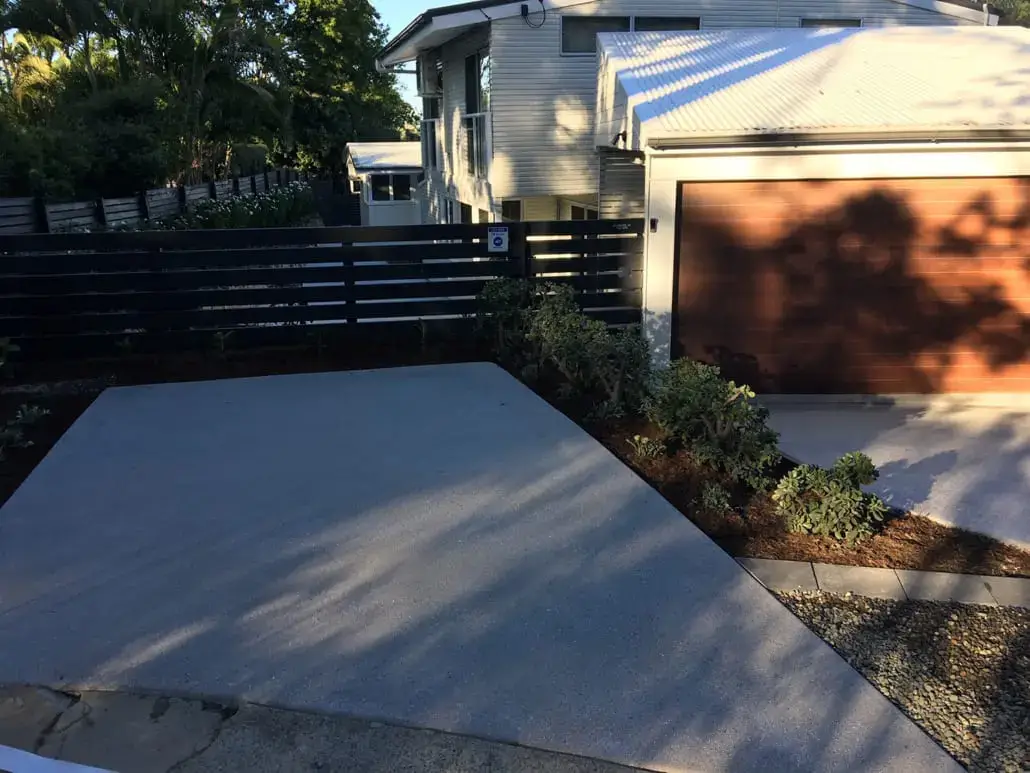
The largest area of concrete most houses own, and the first thing anyone sees. Resurfaced in days, not weeks.
See drivewaysPathways
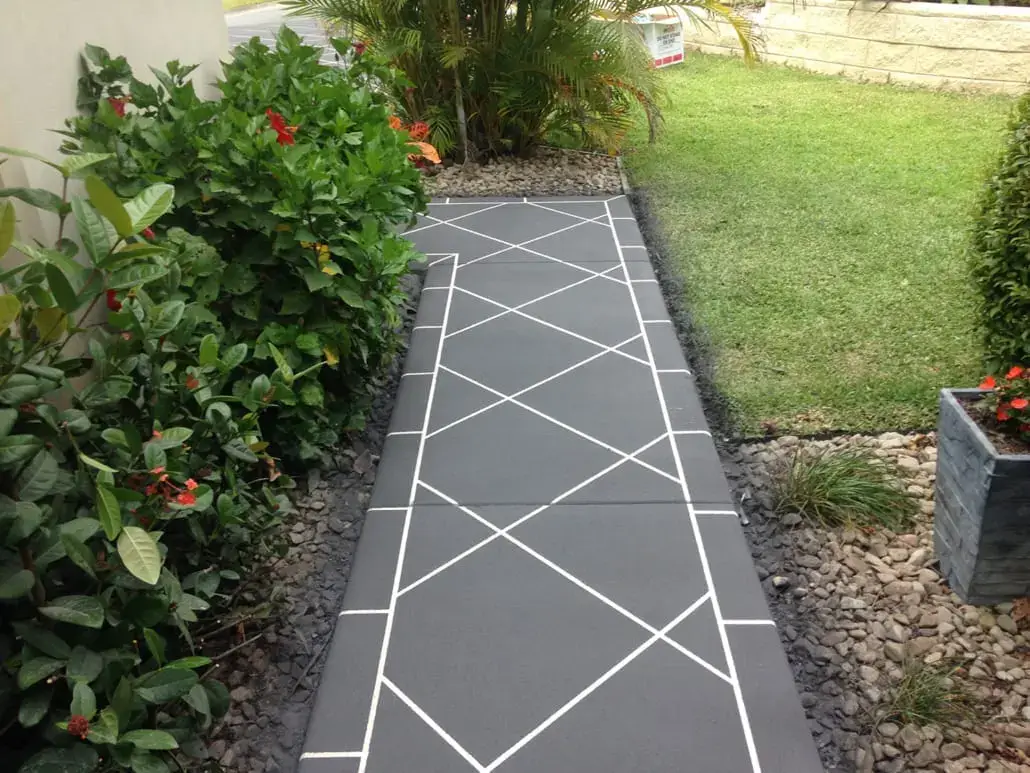
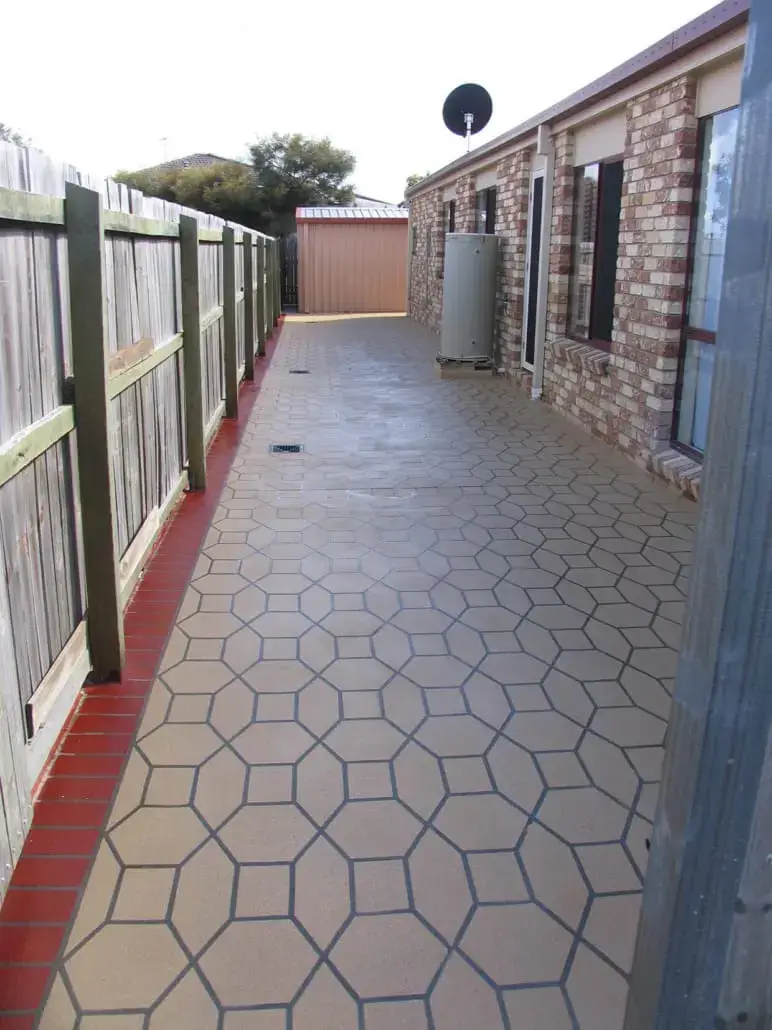
Side paths, entries and garden runs — narrow work where the finish and the falls matter more than the area.
See pathwaysPatios
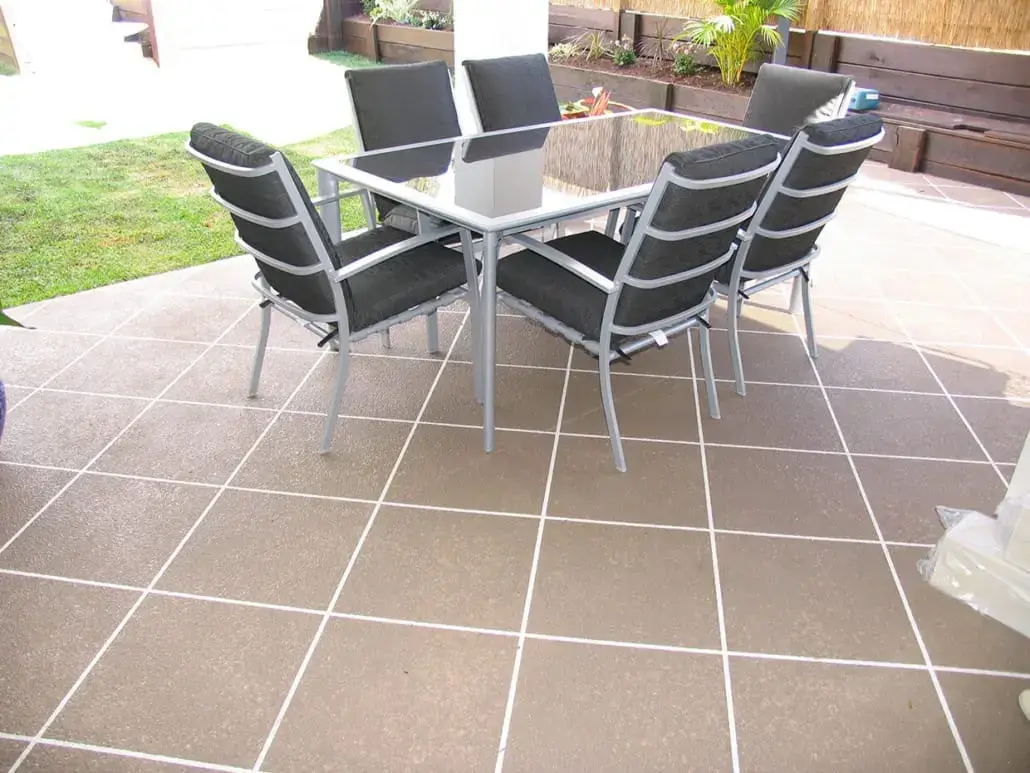
Alfresco floors, under-roof and out in the weather. The one surface people actually look at while sitting still.
See patiosPool surrounds
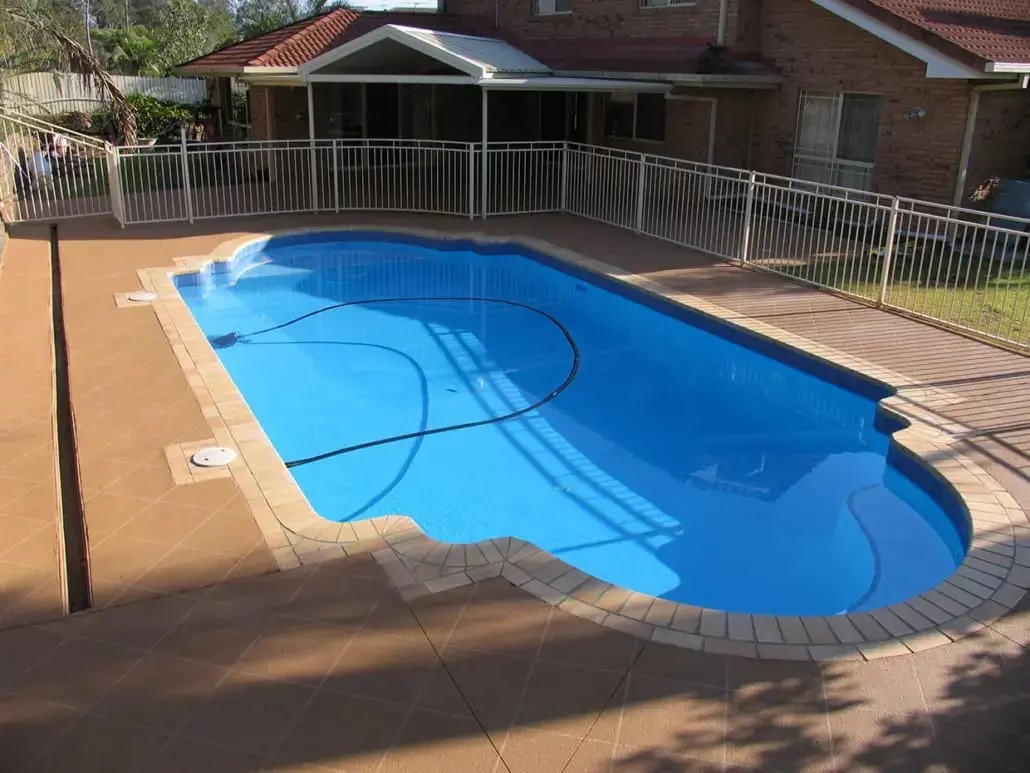
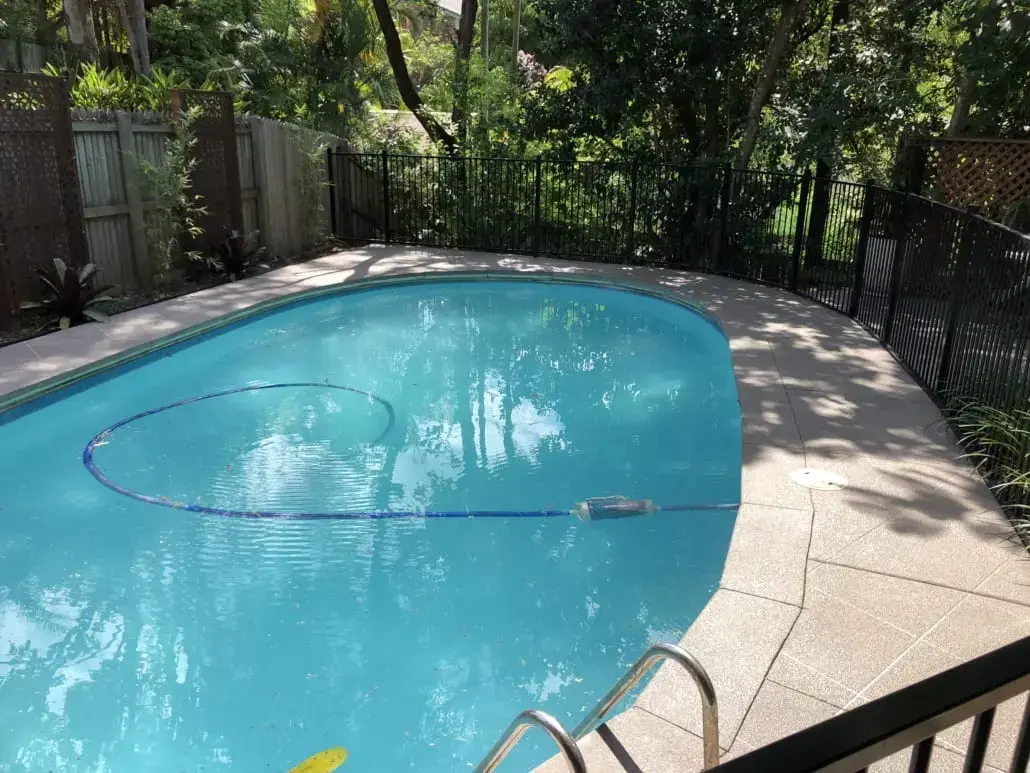
Wet, bare feet, and children running. Slip rating and comfort underfoot decide this one before looks do.
See pool surroundsHouse slabs
Extension slabs, granny flat slabs and garage floors — set out, formed, reinforced and poured.
See house slabsShed slabs
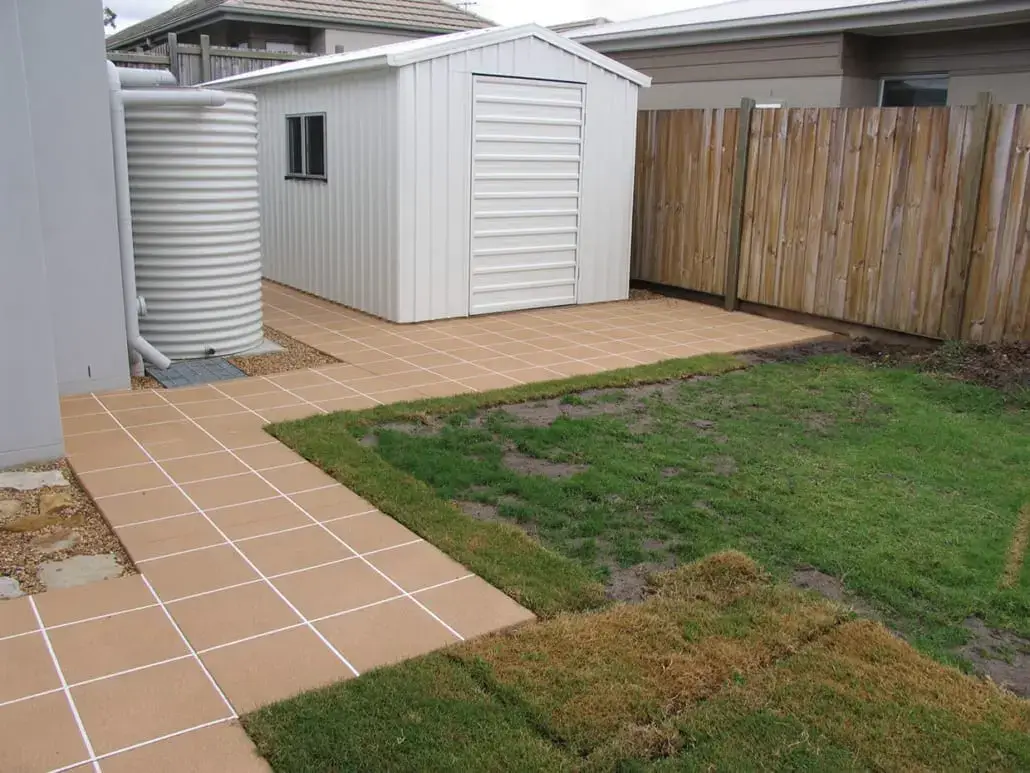
Cut, formed, reinforced and poured with the rebate and tie-down detail the shed kit actually asks for.
See shed slabsStairs and steps
Nosings rebuilt, treads re-profiled, and a slip rating that suits something people fall down rather than over.
See stairs and stepsCommercial and strata
Car parks, hardstands, entries and body corporate driveways, staged so the site keeps trading.
See commercialGarage floors
Vinyl flake, epoxy or grind and seal over the slab that is already there. Moisture tested before anything is coated.
See application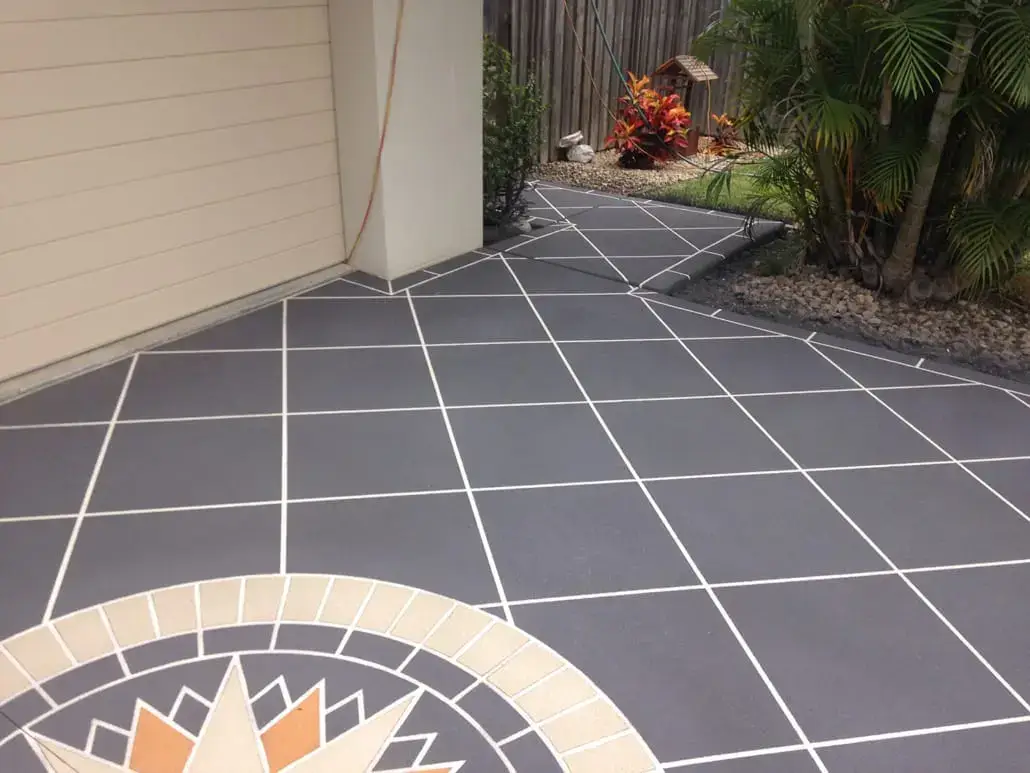
Four days, in the same order, every job.
Preparation is most of the work and all of the warranty. The decorative part is the last day.
01 — Grind and test
Diamond grind back to sound concrete, then moisture and bond test. If the slab fails, you get told before you pay for an overlay that will lift.
02 — Repair and prime
Cracks cut, filled and bridged. Falls corrected so water leaves the slab instead of sitting on it. Primer coat the same day.
03 — Lay the finish
Overlay, stencil, aggregate or flake, laid to the build-up quoted. One crew, no subcontracted finishers.
04 — Seal and cure
Two coats of UV-stable sealer. Foot traffic at 24 hours, vehicles at 72 on most finishes.
Guides that help you choose
Send a photo of the slab.
We will tell you whether it can be resurfaced, what finish suits it, and what it costs — before anyone turns up with a grinder.