Sealing and maintaining a resurfaced slab
Nathan Carter · Decorative Concrete Resurfacing · Updated 24 August 2026The sealer is the wearing layer and is meant to be replaced: every three to five years on a full-sun driveway, five to seven under cover. Maintenance otherwise is hosing, occasional low-pressure washing with a wide fan tip, and treating organic growth in shade. A turbo nozzle held close will cut lines into any decorative finish.
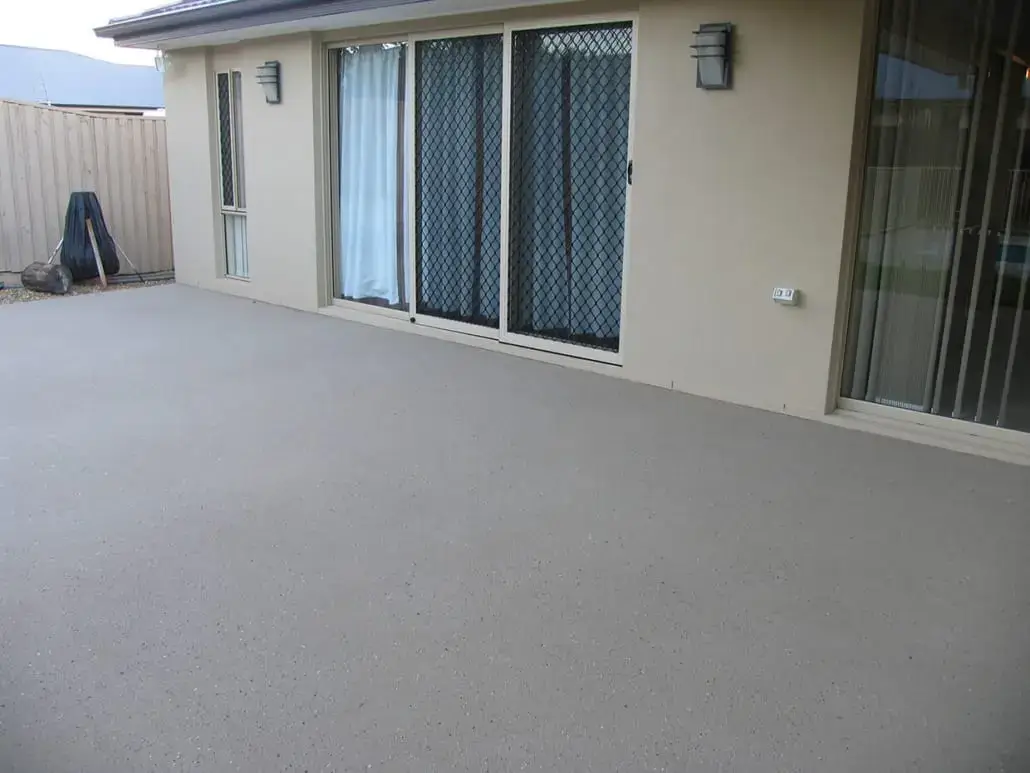
Two coats, UV stable
Sealer is what dulls, not the oxide colour through the coating.
Photographed on one of our own jobs in South East Queensland.
What the sealer is doing
Three jobs: it keeps water and stains out of the coating, it holds the colour against UV, and it takes the mechanical wear that would otherwise land on the finish. It is a sacrificial layer by design.
Which is why "the driveway has gone dull" is usually good news. Dull sealer is a re-coat, not a failure — and a re-coat costs a fraction of a new finish.
Solvent-based versus water-based
Solvent-based acrylics wet the colour out more, giving a deeper, slightly glossier look, and they bite into the surface well. Water-based systems are lower odour, slightly less glossy, and generally more UV stable in the long run.
Either can be the right answer. What matters more is that there are two coats, that the surface was dry and clean when they went on, and that whatever goes on next time is compatible with what is already there. Keep a note of the product used — it saves a grind later.
Re-seal intervals in this climate
- Full-sun driveway: every three to five years
- Shaded or covered patio: every five to seven years
- Pool surround: every three to five years, splash-out being the deciding factor
- Garage floor (epoxy or flake): topcoat as needed, typically longer than exterior work
- Commercial hardstand: annual inspection, re-coat on wear pattern rather than on a schedule
Cleaning without damaging it
Hose first. For anything more, a low-pressure wash with a wide fan tip held well back, moving constantly. A turbo or pencil nozzle held close will cut lines into any decorative finish, and it will strip sealer unevenly, which shows.
For organic growth in shaded areas, a dilute bleach or a proprietary moss and mould treatment left to work, then rinsed. For oil, an absorbent poultice or a citrus-based degreaser — not petrol or thinners, which attack the sealer. Keep pool chemicals off the surface undiluted, and rinse splash-out rather than letting it dry.
Small things that add years
Keep leaf litter off shaded sections, because damp organic matter is what feeds the black staining. Check that downpipes and drains are actually discharging away from the slab. Move the trailer occasionally so the jockey wheel is not always in the same spot. Sweep grit off pool surrounds, because sand underfoot is sandpaper.
None of this is demanding. It is the difference between re-sealing on schedule and re-coating early.
Short answers
Can I re-seal it myself?
Yes, if the surface is clean, dry and you use a compatible product. The two failure modes are sealing over damp concrete and sealing over dirt.
How do I know when it needs re-sealing?
Water stops beading and starts darkening the surface, and the colour looks flat when dry. That is the signal.
Will pressure washing wreck it?
Not at low pressure with a wide fan. High pressure held close will, on any decorative surface.
Written by the Decorative Concrete Resurfacing crew from work carried out across South East Queensland. Last reviewed . QBCC licence 1109935.
Related pages
Send a photo of the slab.
We will tell you whether it can be resurfaced, what finish suits it, and what it costs — before anyone turns up with a grinder.