Covercrete — also sold as Covacrete — is a polymer-modified cementitious coating sprayed through a hopper gun to a fine speckle, 3–4 mm thick, then sealed. Foot traffic at 24 hours, vehicles at 72, around R11. The speckle hides minor surface variation, grips without being abrasive, and takes a stencil or tile cut cleanly.
Covercrete / Covacrete in Brisbane and Ipswich
The classic spray-on resurfacing system: a fine speckled texture, sprayed to a consistent build and sealed.
Covercrete — also sold as Covacrete and a handful of other brand names — is a polymer-modified cementitious coating sprayed through a hopper gun to a fine, even speckle. It has been the workhorse of Australian concrete resurfacing for decades because it is thin, tough and it covers a multitude of sins.
The speckle texture is the point: it hides minor surface variation, gives grip without being abrasive, and takes a stencil or tile cut cleanly. It is the finish most people picture when they picture a resurfaced driveway.
Colour goes through the coating, and a second sprayed colour over a stencil gives the two-tone tile look without any pattern being cut into the slab at all.
Covercrete / Covacrete, by the numbers
Figures are for a standard residential job in South East Queensland conditions. Your quote states the build-up for your slab.
| Build-up | 3–4 mm |
|---|---|
| Foot traffic | 24 hours |
| Vehicles | 72 hours |
| Slip rating | R11 |
| Texture | Fine speckle, knock-down on request |
| Pattern | Plain, stencil or tile cut |
Where this finish belongs
These are the situations where we would put covercrete / covacrete forward without being asked for it.
- Tired original driveways where the slab is sound and the surface has chalked out
- Large areas needing an economical finish with real texture
- Jobs where a stencil or tile pattern will be sprayed over the base colour
- Rental and pre-sale properties where value per square metre matters
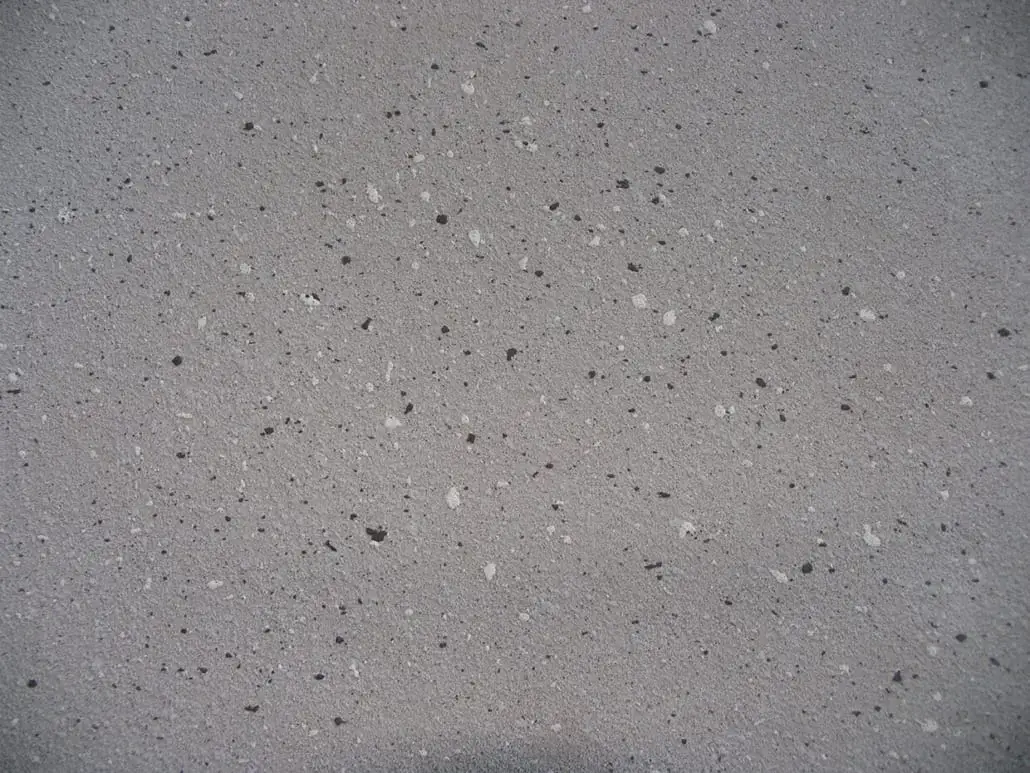
This is the actual finish.
Photographed on a job, sealed, in daylight. We bring samples to the quote so you can see it against your own brick and render.
Where we would not use it
It is a thin system, so it is not a repair for badly spalled concrete — that gets ground and rebuilt first, or a thicker finish.
If your job falls into that category we will say so at the quote and put up the finish that does suit it, rather than selling you the one you asked about.
Looking after it
The coating outlives the sealer by years. Re-seal every three to five years in sun, and pressure clean at low pressure with a wide fan — a turbo nozzle held close will cut visible lines into any sprayed finish.
Full detail, including re-seal intervals by exposure and safe cleaning pressures, is in the sealing and maintenance guide.
The questions we get asked
Is Covercrete different from Covacrete?
They are competing brand names for the same category of spray-applied cementitious overlay. We specify by system performance, not by label.
How long does it last?
The coating outlives the sealer. Re-seal every three to five years in full sun and the surface itself keeps going.
Can I see it before committing?
Yes. Samples come to the quote, and we can usually point you at a job in your suburb to drive past.
How often will it need re-sealing?
Every three to five years in full sun and around five to seven under cover. The sealer is the wearing layer and re-coating it is a fraction of the cost of a new finish.
Guides on this finish
Send a photo of the slab.
We will tell you whether it can be resurfaced, what finish suits it, and what it costs — before anyone turns up with a grinder.