Garage floor coating and resurfacing
Vinyl flake, epoxy and sealed concrete — over the slab that is already there.
A garage floor is the easiest surface in the house to improve and the one most often coated badly. Vinyl flake is the most forgiving option: it hides dust and tyre marks, tolerates slab movement and gives real slip resistance. Epoxy is harder and better for workshops. Both live or die on preparation and on whether the slab is dry — we grind mechanically and moisture test before anything goes down.
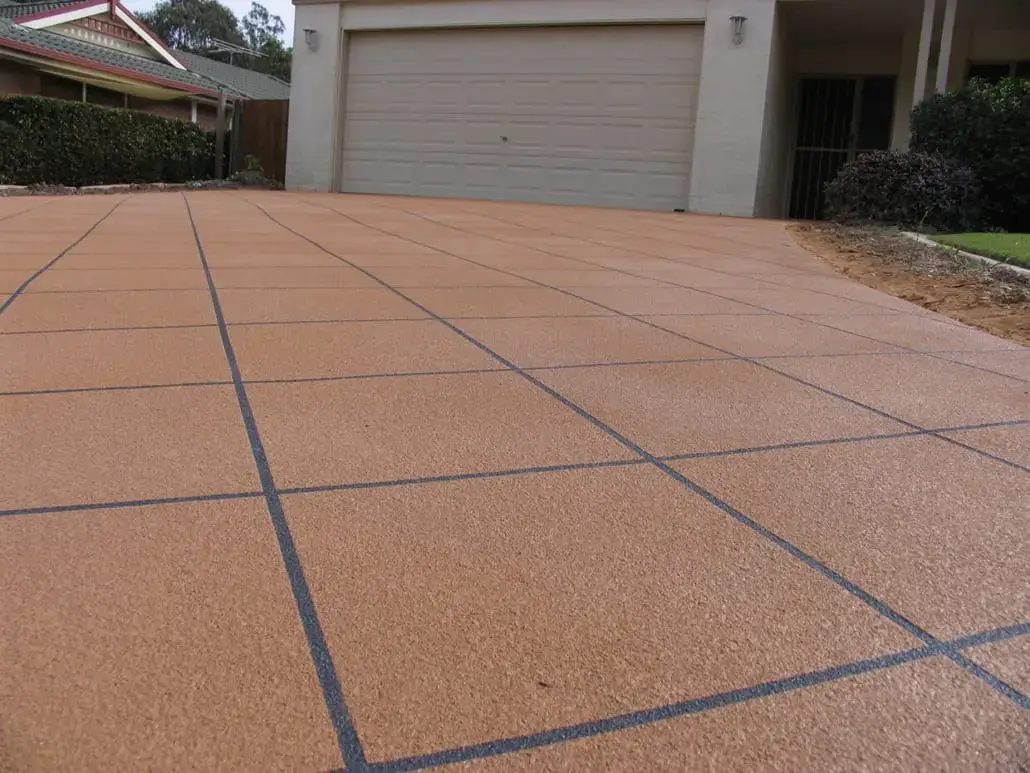
Garage floors take hot tyres
Which is why moisture testing and preparation decide the system.
Photographed on one of our own jobs in South East Queensland.
What this covers
Most garage slabs in South East Queensland are bare, sealed once at handover, and dusting quietly ever since. They are also the cheapest square metres in the house to transform, because there is no weather, no UV and no vehicle turning at speed — just tyres, dropped tools and whatever leaks out of the car.
The three real options are vinyl flake, epoxy, and grinding and sealing the existing concrete. They are not ranked; they suit different garages.
What they share is that failure is almost always a bond or moisture problem rather than a product problem. A garage floor coating that peels in sheets was either laid on an unprepared surface or over a slab that was still releasing water.
- Vinyl flake systems
- Epoxy coatings for workshops and plant
- Grind and seal on existing concrete
- Moisture testing before coating
- Dust suppression on friable slabs
- Coating removal and re-coating
Three ways to do a garage floor
| Vinyl flake | Flake broadcast into resin and sealed. Hides dust, tyre marks and minor slab imperfections, tolerates movement, and has genuine texture underfoot. The default recommendation for a domestic garage. |
|---|---|
| Epoxy | Harder and more chemically resistant, seamless, easy to sweep. Best in workshops and plant rooms. Smooth epoxy is slippery wet, so it needs a broadcast or an additive where water gets in. |
| Grind and seal | No coating at all — the slab is ground to expose the aggregate and then sealed. Cheapest of the three, keeps a concrete look, and will not peel because there is nothing laid on. |
| Cure and return | Foot traffic typically 24 hours, vehicles 72. Full chemical cure takes longer; we tell you when to avoid harsh cleaners and hot tyres. |
Why garage coatings peel
Nearly every failed garage floor we are called to look at comes down to one of two things. Either the slab was not mechanically prepared, or it was wet.
New slabs carry a curing compound and a slick trowelled surface, and a coating will not key into either. Acid etching — the shortcut that makes a cheap quote cheap — does not remove them. We grind under vacuum extraction until the concrete is clean, open and profiled, which is most of the labour and all of the difference.
Moisture is the other half. Concrete releases water for months after it is poured, and a slab without a membrane under it keeps drawing it from the ground indefinitely. Coat over that and the water collects in the bond line until it pushes the coating off. We moisture test every time, and where the reading is high the answer is either to wait or to use a moisture-tolerant primer.
Hot tyre pickup, and what stops it
Hot tyre pickup is the failure specific to garages: a car parked on a warm coating, tyres still hot from the road, and the plasticiser in the tyre softening the coating enough to lift it when the car pulls out. It leaves a print of the tread.
It happens to thin, poorly bonded coatings — cheap single-part products and anything laid over an unprepared slab. A properly bonded, correctly cured system does not do it. This is the single most useful question to ask anyone quoting you a garage floor, because the answer tells you whether they are selling a coating system or a tin of paint.
Dust, and the cheapest fix
If the complaint is dust rather than appearance, you may not need a coating at all. A slab that dusts has a weak friable surface layer, and grinding that off and sealing the sound concrete underneath solves it at a fraction of the cost of a flake or epoxy system.
What does not work is sealing over the friable layer, which traps a weak surface under a coating that then delaminates with the dust still under it.
What goes down on a garage floor
Flake flooring
Vinyl flake broadcast into resin and sealed. Hides dust and tyre marks, tolerates movement, real texture underfoot.
See finishEpoxy flooring
Hard, seamless and chemically resistant. The workshop and plant-room choice; needs a broadcast where water gets in.
See finishPolished concrete
No coating at all — the slab ground to expose aggregate and sealed. Cheapest of the three and it cannot peel.
See finishThe questions we get asked
Flake or epoxy for a home garage?
Flake, in most cases. It hides dust and tyre marks, copes with slab movement, and has real texture underfoot. Epoxy is the better choice in a workshop where chemical resistance matters more.
Will the coating lift when I park a hot car on it?
Not if it is properly bonded and fully cured. Hot tyre pickup happens to thin, poorly prepared coatings — it is a preparation failure, not an inevitability.
My garage floor is new. Can it be coated now?
We will moisture test and tell you. New concrete releases water for months and coating too early traps it. Waiting costs nothing; redoing a lifted floor costs a lot.
The floor just dusts. Do I need a full coating?
Probably not. Grinding off the weak surface layer and sealing the sound concrete underneath fixes dust for far less than a coating system.
Can you remove an old peeling coating?
Yes — it has to come off before anything new goes on. Coating over a peeling floor fails again, taking your new coating with it.
How long before I can park on it?
Foot traffic at 24 hours, vehicles at 72 for most systems. We give you the specific figures for the product on the quote.
Worth reading first
Send a photo of the slab.
We will tell you whether it can be resurfaced, what finish suits it, and what it costs — before anyone turns up with a grinder.