Residential concrete resurfacing
Driveways, pool surrounds, patios and garage floors — over the concrete you already have.
Residential concrete resurfacing means keeping the slab you already own and replacing only the surface on top of it. On a sound slab it costs roughly a third to a half of removal and repouring, takes three to four days instead of three to four weeks, and leaves no spoil to cart away. It suits driveways, pool surrounds, patios, paths, stairs and garage floors. It does not suit a slab that is rocking, stepped at a crack, or too thin to grind.
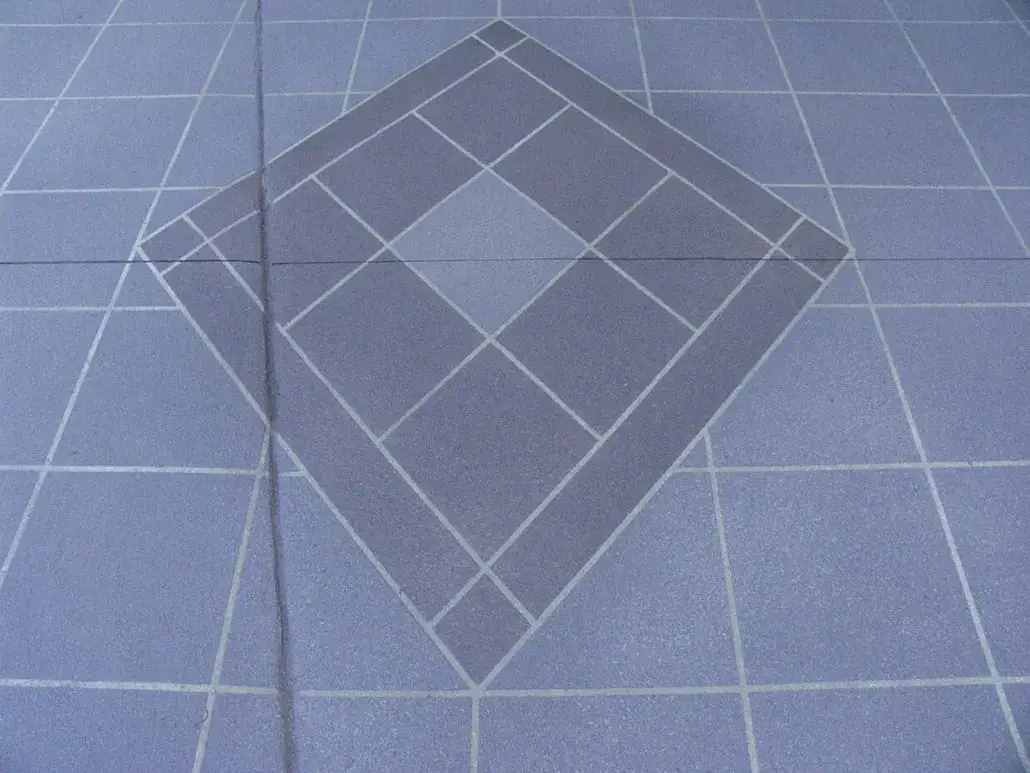
Driveways, pools and patios
The surfaces a household actually uses, resurfaced over the slab already there.
Photographed on one of our own jobs in South East Queensland.
Which surfaces around a house suit resurfacing
This is the homeowner's view: which surfaces suit resurfacing, what it costs against replacement, and what living with the work is like. The technical detail — grinding depth, bond and moisture testing, build-ups and cure windows — sits on the concrete resurfacing service page.
The most common job we quote is a decorative concrete driveway over an existing slab — exposed aggregate, stencilled tile, coloured or plain — because the concrete is almost always sound and only the surface has failed.
Most houses in South East Queensland already own enough concrete. The driveway is there, the pool surround is there, the path down the side is there. What has failed is the top two or three millimetres: a spray-on finish that has chalked, a stencil pattern that has faded to grey, a plain slab that has gone patchy and green on the shaded side.
Resurfacing addresses that layer and leaves the structure alone. We grind the existing surface back to sound concrete, test the slab for moisture and movement, repair what needs repairing, then lay and seal a new finish over the top. The slab stays. The surface changes.
It is worth being clear about when this is the wrong answer. If a slab rocks under load, steps at a crack, or has been ground so thin there is no cover left, an overlay buys a year or two and wastes your money. We say so at the quote rather than after.
- Driveways and crossovers
- Pool surrounds at R11–R12
- Patios, alfresco areas and entries
- Paths, side access and stairs
- Garage and laundry floors in epoxy or vinyl flake
- Crack repair, grinding and joint replacement
Cost, time, look, life
| What it costs | Roughly a third to a half of removal and repour on a sound slab. The saving is in what you are not paying for: demolition, cartage, tip fees and new concrete. |
|---|---|
| How long it takes | Three to four days for a typical driveway, against three to four weeks for a full replacement. Foot traffic at 24 hours, vehicles at 72 on most finishes. |
| What it looks like | Anything from a single flat colour to a cut and coloured pattern, washed aggregate, or a honed finish that reads like stone. The finish is a choice; the substrate is not. |
| How long it lasts | Ten to fifteen years on a correctly prepared inland slab with maintenance resealing. Less on salt-exposed coastal sites. Anyone quoting a single number without asking about exposure is guessing. |
What a residential job actually involves
Day one is preparation, and it is most of the job. The existing surface is ground back mechanically — not acid etched — until what is left is sound, clean, profiled concrete. Contamination comes out at this stage: oil in the garage, tannin staining under trees, algae on the shaded side. An overlay bonds to whatever it lands on, so if it lands on a failing coating it fails with it.
Then the slab gets tested. Moisture, because sealing over a slab that is still releasing water traps it and lifts the coating later. Movement, because a crack that is still moving will telegraph straight through anything laid over it. Both tests are quick and both change the quote if they come back badly.
Repairs come next: cracks cut out and re-formed where they are moving, filled and bridged where they are stable, joints reinstated so the slab can keep moving where it was designed to. Then the finish goes down, and then it gets sealed.
Living with the work
The practical questions are almost always about access and timing rather than finishes. On a single-driveway house we stage the work in halves so there is always a way in or out, which adds a day and is worth it.
Cure times are not negotiable and we would rather be unpopular than flexible about them. Foot traffic at 24 hours, vehicles at 72 on most finishes, and up to seven days on exposed aggregate and stamped work. Marking a fresh surface on day two is permanent.
Dust is managed with extraction and screening rather than apology. Around a pool that matters a great deal, and it is part of the job rather than an extra line on the quote.
Residential applications
The questions we get asked
Is resurfacing cheaper than replacing the concrete?
On a sound slab, yes — usually a third to a half the cost, because you are not paying for demolition, cartage, tip fees or new concrete. On a failed slab it is not cheaper at all, because it does not work.
How do I know if my slab can be resurfaced?
It needs to be structurally sound, not rocking, not stepped at a crack, and thick enough to grind. We test-grind a patch at the quote so the answer comes from your slab rather than from a brochure.
How long before we can park on it?
Foot traffic at 24 hours, vehicles at 72 on most finishes. Exposed aggregate and stamped work can need up to seven days.
Will the old cracks come back through?
A stable crack can be filled and covered. A moving crack cannot — it gets cut out and re-formed as a proper joint first. We tell you which yours is before quoting.
Can we still use the driveway while you work?
Yes. We stage single-access driveways in halves so there is always a way in or out. It adds a day and it is built into the quote.
Does it need maintenance?
Resealing, on a cycle that depends on exposure — longer inland, shorter near salt water. We give you a realistic interval for the actual product rather than a marketing figure.
Working on a commercial site?
Send a photo of the slab.
We will tell you whether it can be resurfaced, what finish suits it, and what it costs — before anyone turns up with a grinder.