Stamped concrete presses textured mats into a 6–10 mm overlay while it is still workable, then colour-washes and seals it so low points hold darker colour like real stone. Slate, flagstone, cobble and timber-plank textures. Foot traffic at 48 hours, vehicles at seven days, R11–R12 because the texture is physical rather than printed.
Stamped concrete in Brisbane and Ipswich
Texture pressed into the overlay while it is green: slate, flagstone, cobble or timber, with real relief you can feel.
Where stencilling gives you pattern, stamping gives you texture. A trowelled overlay is stamped with textured mats while it is still workable, then colour-washed and sealed so the low points of the relief hold darker colour, exactly as they would in real stone.
The result carries much more depth than a printed or sprayed pattern, and it is the closest a resurfaced slab gets to genuine flagstone or timber decking. It is popular around pools, alfresco areas and entries where people walk slowly and look down.
Because the texture is physical, slip performance is good even wet — and it can be dialled up or down by how heavily the surface is stamped and which sealer goes over it.
Stamped concrete, by the numbers
Figures are for a standard residential job in South East Queensland conditions. Your quote states the build-up for your slab.
| Build-up | 6–10 mm |
|---|---|
| Foot traffic | 48 hours |
| Vehicles | 7 days |
| Slip rating | R11–R12 |
| Textures | Slate, flagstone, cobble, timber plank |
| Colour | Base oxide with antique wash |
Where this finish belongs
These are the situations where we would put stamped concrete forward without being asked for it.
- Alfresco areas and patios where the surface is seen close up
- Pool surrounds needing texture with grip that is comfortable wet
- Entries and courtyards where the look of flagstone or slate is wanted
- Feature areas where the extra build-up and hand work is justified
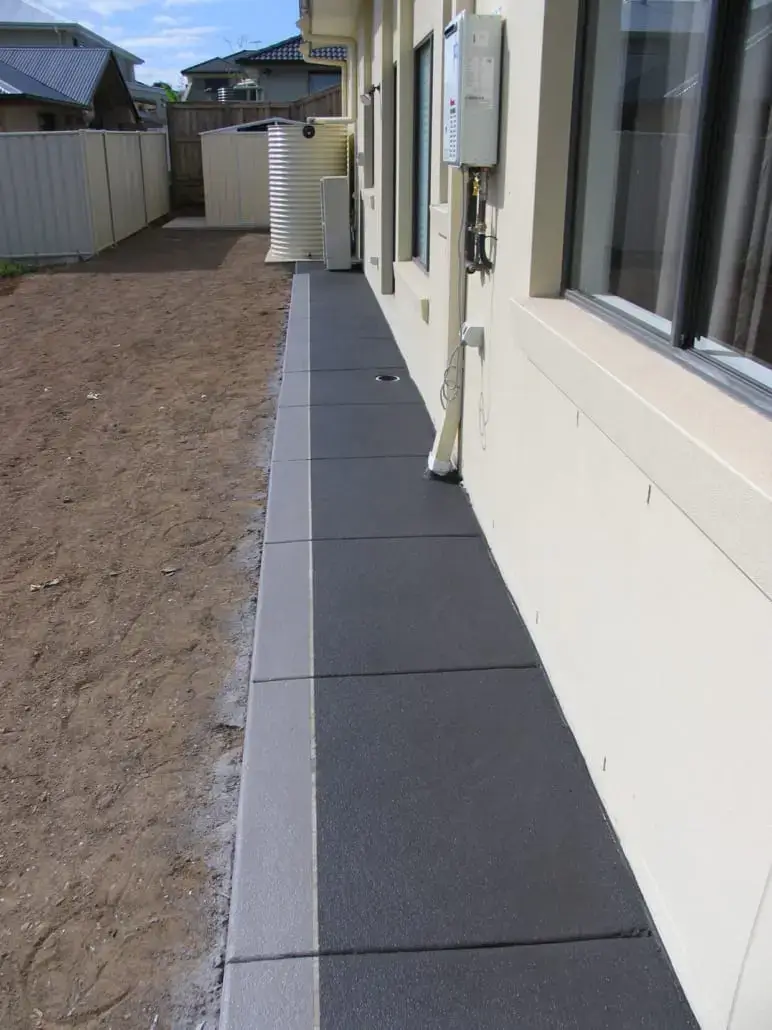
This is the actual finish.
Photographed on a job, sealed, in daylight. We bring samples to the quote so you can see it against your own brick and render.
Where we would not use it
Not our first choice on a working driveway — vehicle traffic wears the high points of the relief unevenly over time.
If your job falls into that category we will say so at the quote and put up the finish that does suit it, rather than selling you the one you asked about.
Looking after it
The relief holds slightly more dirt than a flat finish; a hose and an occasional low-pressure clean handles it. The antique colour wash sits in the low points, so avoid aggressive scrubbing there, and keep the sealer current to hold the depth of colour.
Full detail, including re-seal intervals by exposure and safe cleaning pressures, is in the sealing and maintenance guide.
The questions we get asked
Is stamped concrete hard to clean?
The relief holds a little more dirt than a flat finish. A hose and an occasional pressure clean at low pressure is enough.
Can it be laid over an existing slab?
Yes — it is a thicker overlay than a spray finish, so the slab needs to be sound and the surrounding levels need to allow for the build-up.
Can I see it before committing?
Yes. Samples come to the quote, and we can usually point you at a job in your suburb to drive past.
How often will it need re-sealing?
Every three to five years in full sun and around five to seven under cover. The sealer is the wearing layer and re-coating it is a fraction of the cost of a new finish.
Guides on this finish
Send a photo of the slab.
We will tell you whether it can be resurfaced, what finish suits it, and what it costs — before anyone turns up with a grinder.