Retail and hospitality resurfacing
Shopfronts and alfresco areas, turned around between trading days.
Retail and hospitality resurfacing is governed by trading hours and by wet-area slip rating. Entries and alfresco areas are turned around overnight or between trading days, staged in halves so a doorway never fully closes. Back-of-house and wash-down areas need coved, sealed, cleanable surfaces rather than decorative ones.
Entries that read as finished
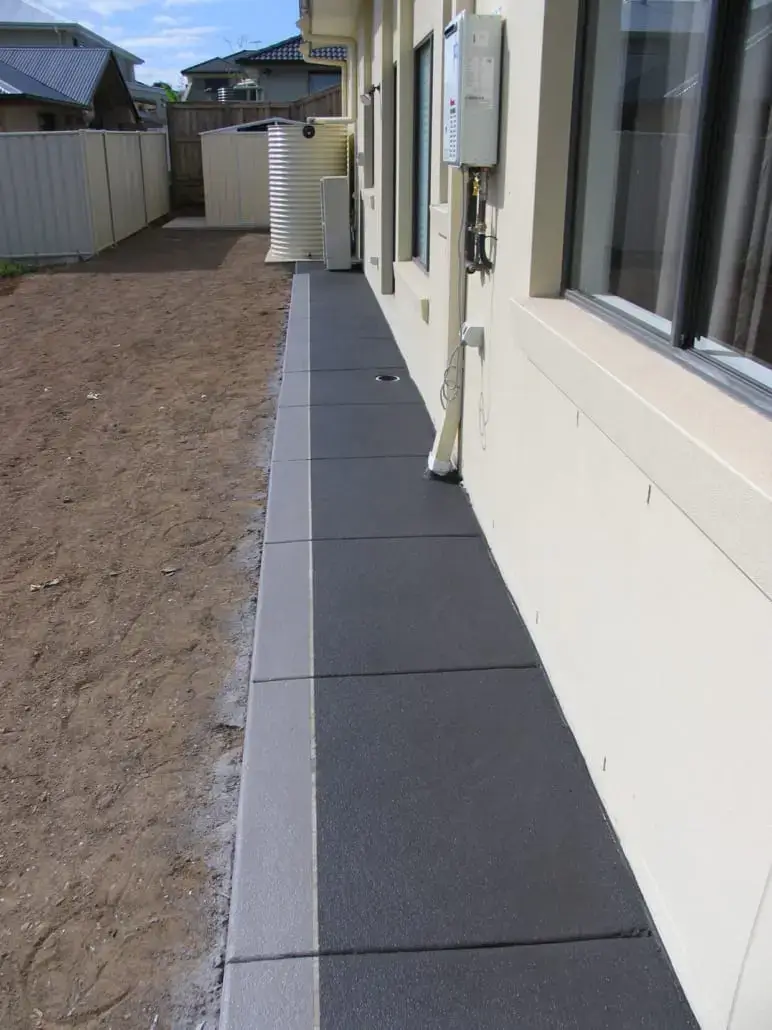
A bordered tile stencil — the kind of detail a shopfront entry carries well.
Photographed on one of our own jobs in South East Queensland.
What this covers
A cafe cannot lose its entry for a week and a restaurant cannot lose its alfresco area over summer. So the constraint on this work is time, and everything else is arranged around it.
The second constraint is water. Hospitality floors get wet — spills at the bar, wash-down back of house, rain blowing into an alfresco area — and wet floors with staff moving quickly are a genuine safety matter rather than a specification detail.
- Shopfront entries and thresholds
- Alfresco and footpath dining areas
- Bar and service area floors
- Back-of-house and wash-down areas
- Coved, sealed and cleanable surfaces
- Overnight and between-trading turnarounds
Slip rating where staff move fast
Front of house is a customer surface and back of house is a workplace, and they get rated differently. We specify to the wet condition in both cases, higher again in wash-down areas and behind a bar where the floor is wet for most of a shift.
It goes on the quote as a rating rather than as the word non-slip, so there is a number to point at if it is ever questioned.
Cleanable rather than decorative
Back-of-house floors need to be washable and to have no open joints or unsealed junctions holding water and residue. That means coving at wall junctions, sealed penetrations, and a continuous surface rather than a patterned one with texture that traps grease.
Front of house can be decorative — honed and grind-and-seal finishes work well in a retail fit-out and read like stone at a fraction of the cost. Those choices are open once the wet areas are handled properly.
Turning it around in the time available
We stage a wide entry in halves so the doorway is never fully closed, and we use products with return-to-service times that fit the window rather than the ones that would be cheapest on an empty site.
That does cost more per square metre, and we would rather explain why than quote a rate that assumes you can close for four days.
The questions we get asked
Can you work overnight so we do not lose a trading day?
Yes. Overnight and between-trading turnarounds are the normal way this work is done, using products with return-to-service times that fit the window.
Will our entry be closed?
Not fully. We stage a wide entry in halves so there is always a way in.
What slip rating do we need behind the bar?
Higher than front of house, rated for the wet condition, because the floor is wet for most of a shift. The rating goes on the quote as a number.
Can a back-of-house floor be decorative?
It should not be. It needs to be cleanable — coved at the wall junctions, sealed, continuous, with no texture that traps grease. Decorative choices belong front of house.
Why is this more expensive per square metre than a driveway?
Because the products and the hours are chosen to fit your trading window rather than the cheapest schedule. We would rather explain that than quote as if you could close for four days.
Other commercial work
Car parks and hardstands
Ramps, aprons and bays — resurfaced in sections so the car park keeps taking cars.
Read moreWarehouse and factory floors
Floors that carry forklifts, and cannot stop receiving.
Read moreStrata and body corporate
Shared driveways and ramps, staged so nobody is locked in or out.
Read moreWorth reading first
Send a photo of the slab.
We will tell you whether it can be resurfaced, what finish suits it, and what it costs — before anyone turns up with a grinder.